Sitting all day is not a heavy load on the spine but a constant one. Your discs and the muscles around them stay in one position for hours, and the ache comes from that.
Desk workers tell me the same thing every time. They know they sit badly, and they are sure that is why they hurt. When I watch them sit, many are quite upright. They still ache by four in the afternoon, because they have been sitting all day. So I ask how long they sit before I ask how they sit.
What sitting all day does to your lower back
Researchers once measured the pressure inside a living disc while a volunteer sat, stood and lay down. Sitting upright pressed on the disc about as much as standing did. Slumping forward pushed the reading up. Later studies disagree on the exact numbers, but they agree that bending forward raises the load.
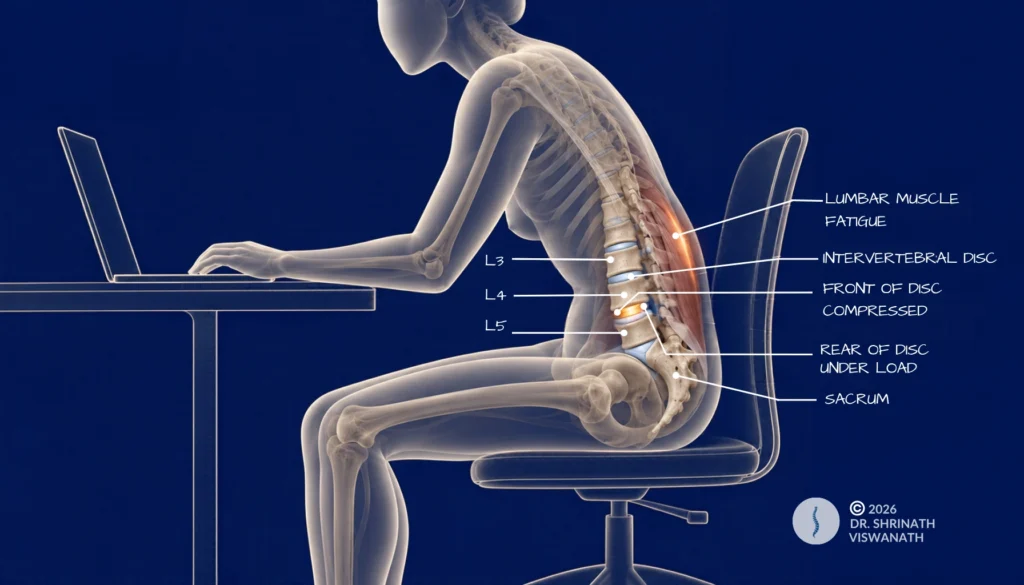
So I no longer worry about ten minutes of slouching. I worry about a body that stays in one position for hours. Most of that ache is tired tissue rather than damaged tissue. Some of it is not coming from the spine at all, as I explain in my article on whether your back pain is the spine or something else.
What your neck does while you work at a screen:
A screen below eye level pulls your head forward and down. The muscles at the back of your neck hold it there for hours, and the joints and discs in the lower neck carry the angle. Laptops make it worse, and many people work on one while sitting all day. By evening the ache usually sits between the shoulder blades or at the base of the skull. If it runs into the arm or hand, a nerve in the neck may be irritated, which is what happens in cervical disc disease.
Why sitting all day wears on the spine
- Discs that rarely change load
A disc has very little blood supply of its own. It depends on pressure changing as you move to draw fluid in and push waste out. Sitting still gives it little of that. If the disc is already worn with age, as in degenerative disc disease, you may notice it sooner.
- Muscles that never switch off
The muscles that hold you upright work at a low level all day. Holding one position tires a muscle faster than moving does. The tired muscle aches and then tightens.
- Posture that slips by afternoon
As the muscles tire, the back rounds and the head drifts forward. Rounding is the position in which disc pressure was seen to rise. So the slump at three o’clock is mostly the result of the hours before it.
- Joints that stay put
Spinal joints stiffen when they stay in one position for hours, which is why the first steps after standing up feel tight and sore.
What I ask desk workers to change:
You may not be able to avoid sitting all day, but you can break it up. Change position before the pain asks you to. Every thirty minutes or so, stand, walk to a window or shift your weight. A minute is enough. Walking also changes the load on your discs, and strong back and hip muscles take longer to tire.
When to See a Doctor
Arrange a spine assessment if:
PLAN AN EVALUATION
- Your pain has not eased after several weeks of regular breaks and movement
- Pain travels from your back into the leg, or from your neck into the arm
- You have numbness or tingling in your leg, foot, arm or hand
- Pain wakes you at night and does not settle when you change position
SEEK URGENT CARE
- Difficulty passing urine, or loss of control of your bladder or bowels
- Numbness around the groin, genitals or inner thighs
- Weakness in one or both legs that is getting worse
- Clumsy hands, trouble with buttons or handwriting, or an unsteady walk
These can be signs of cauda equina syndrome, a condition in which the nerve bundle at the base of the spinal cord is compressed, or of pressure on the spinal cord in the neck. Either needs same day orthopaedic or emergency evaluation. Do not wait.
COMMON QUESTIONS
Q1: Will a standing desk solve this?
Not on its own. Standing all day only swaps one fixed position for another. It helps if you actually alternate between the two.
Q2: Does a better chair or lumbar support help?
It can make long stretches more comfortable. It does not replace getting up, because even a good chair leaves you sitting all day.
Q3: Can long hours at a desk cause a slipped disc?
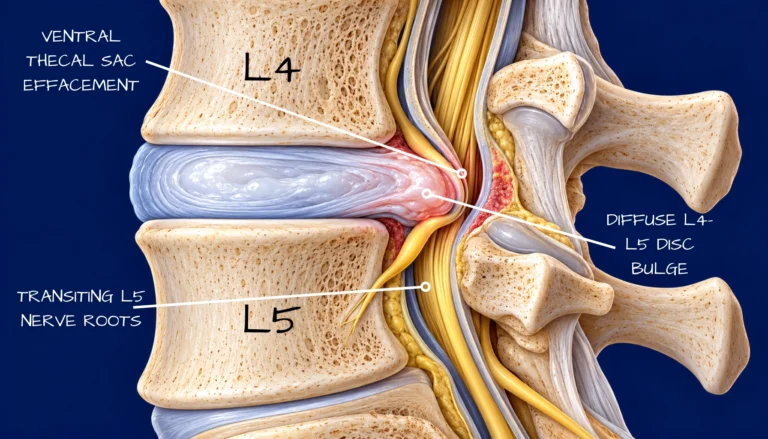
Sitting by itself has not been shown to cause one. A disc that is already weakened can bulge, and long hours may irritate it. I explain what a bulge or herniation means in my article on a slipped disc, disc bulge and herniation.
Q4: Do I need an MRI for pain from desk work?
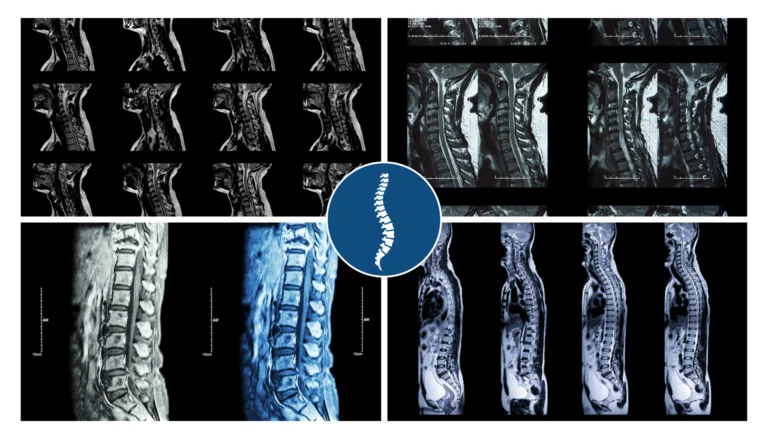
Usually not at the start. A scan makes sense when pain persists, travels into a limb or comes with weakness. Many people with no pain also show changes on imaging, so reading a spine MRI report always needs clinical context.