Back pain does not always come from the spine. A hip problem, an irritated sacroiliac joint or strained back muscles can feel the same as disc pain, and each needs a different treatment.
Most patients who describe back pain to me, or kamar ka dard as many of them put it, have already been given a diagnosis. A physiotherapist thought it was a disc, a general practitioner said muscle strain, and a scan report used the word degeneration. They come to me for confirmation, and often the first thing I do is check whether the spine is involved at all.
Why back pain has more than one possible source:
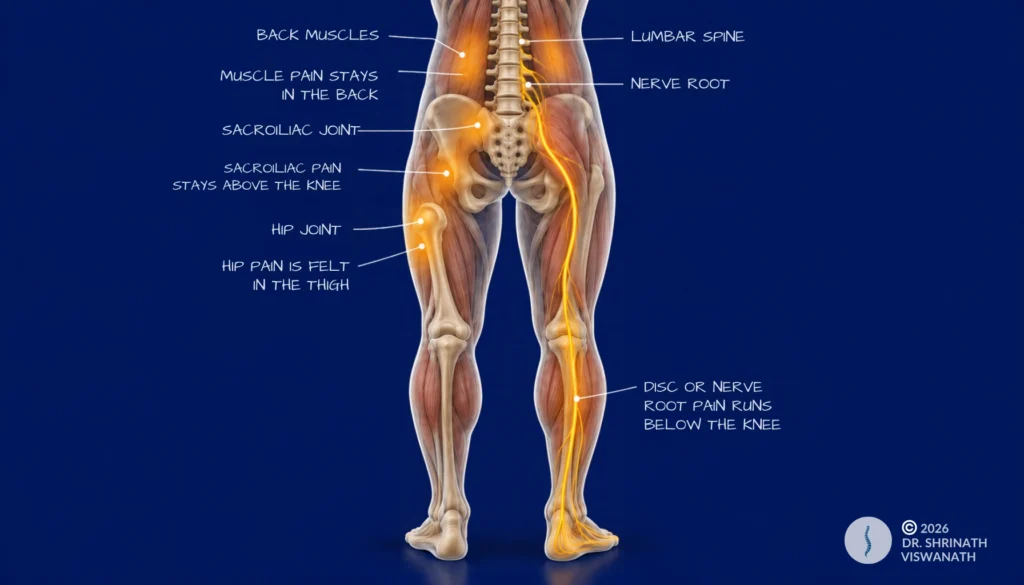
The disc, the sacroiliac joint, the hip and the back muscles can all produce pain that feels as if it sits in the lower back, so the place you point to tells me very little. A 2017 Lancet review of low back pain explains that in most people no single structure can be named as the cause, and that serious disease is behind only a small minority of cases. A label such as back pain or disc problem tells you where it hurts and not what to treat, which is why I look at the pattern.
Four patterns that point to different sources:
What each pattern tends to feel like
- Disc or nerve root pain
Pain runs down the leg, often below the knee, with numbness or tingling in the calf or foot. This is called radiculopathy, which means a nerve root is irritated as it leaves the spine, and it often feels worse when you sit or bend forward. It is the pattern of a disc pressing on a nerve root.
- Sacroiliac joint pain
A deep ache low in the back or buttock, usually on one side, that stays above the knee. It often hurts after long standing or walking, or when you roll over in bed, and people tend to point to a spot near the dimple of the lower back. A doctor can bring it on with specific tests that stress the joint, as I describe in my article on sacroiliac joint dysfunction.
- Hip joint pain
Pain in the groin, thigh or outer buttock that patients often call back pain. It hurts when the hip turns, such as when you get out of a car, and after long walks. This is why I check how the hip moves in everyone who comes to me with back pain.
- Muscle or posture pain
A dull ache across the lower or mid back that builds through the day and eases when you move. It does not travel into the leg and does not follow one position the way disc pain does. It is very common, and it often gets blamed on whatever the scan happens to show.
Four Patterns That Point to Different Sources:
No single symptom confirms a diagnosis. But certain patterns reliably point in a particular direction, and understanding them is the first step in making sense of your own presentation.c
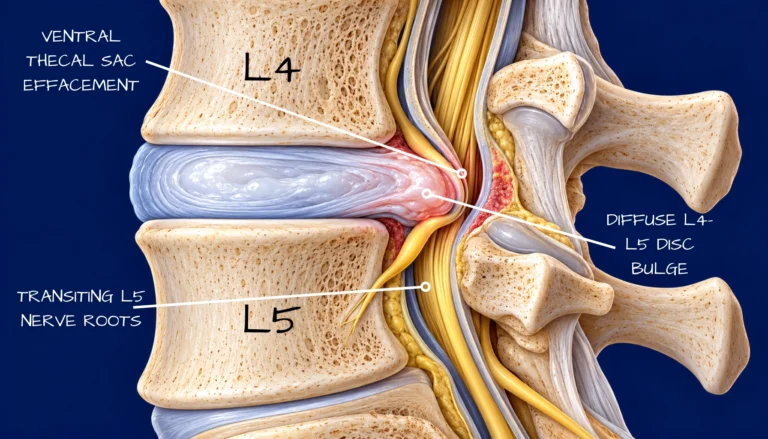
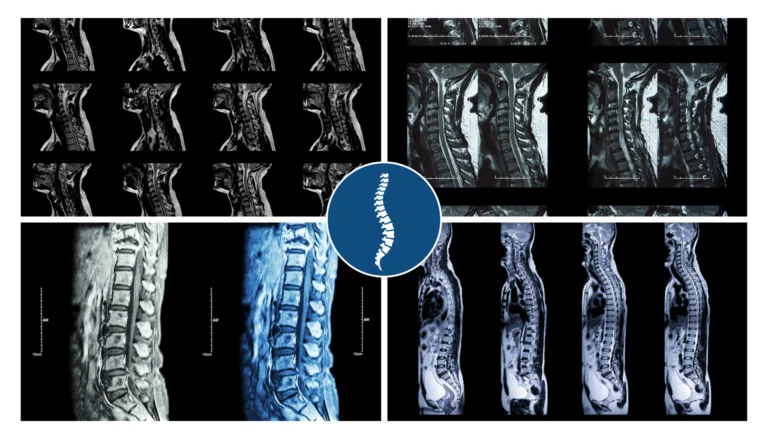
A scan can mislead here. In a review of imaging in people with no back pain, about half of adults aged 40 had a disc bulge, so a bulge on your report does not prove the disc is your source. I explain how to read these findings in my article on your spine MRI report.
When to See a Doctor
Arrange a spine assessment if:
PLAN AN EVALUATION
- Pain travels from your back below the knee, or comes with numbness or tingling in the calf or foot.
- Your back pain has not improved after several weeks of rest, movement and physiotherapy.
- You have groin pain along with back pain.
- Your pain behaves differently from the diagnosis you were given.
SEEK URGENT CARE
- Loss of bladder or bowel control, or new difficulty passing urine
- Numbness in the saddle area, meaning the inner thighs, groin or around the anus
- Weakness in one or both legs that is getting worse quickly
These may be signs of cauda equina syndrome, a condition in which the nerve bundle at the base of the spinal cord is compressed. This requires same day orthopaedic or emergency evaluation. Do not wait.
COMMON QUESTIONS
Q1: Can a hip problem really cause back pain?
Yes. A hip joint can send pain to the buttock, thigh and groin, and patients often describe it as back pain. Limited turning movement of the hip on examination is often what gives it away when the spine looks normal.
Q2: How does a doctor tell sacroiliac pain from disc pain?
Mostly through history and examination. Sacroiliac pain usually stays above the knee and can be brought on by tests that stress the joint, while disc pain follows the path of a nerve and responds to different positions.
Q3: Is leg pain always sciatica from a disc?
No. A disc is the most common cause, but narrowing around the nerve can produce the same leg pain, and pain that stays above the knee is less likely to be nerve pain at all. I explain the differences in my article on sciatica.
Q4: Should I see a physiotherapist or a spine surgeon first?
Either can be a sensible start for pain without leg symptoms. A spine assessment is the better first step when pain travels into the leg or has not settled with several weeks of care, because it also tells you whether the problem lies elsewhere.

Pingback: Sitting All Day: 4 Hidden Reasons Your Spine Hurts
Pingback: Spine MRI Report: 5 Critical Findings Patients Miss